周边工作日用餐人群
Nearby weekday diners
需要方便携带、出餐可预期、价格清楚的一餐。通过周边企业、园区渠道与门店公告触达。
A portable meal with clear pricing and predictable service. Reach through nearby businesses, local office channels and in-store information.
以恰巴塔为主推产品,设计餐车、推广内容和回店优惠,提出从外带尝试到堂食回访的营销方案。
A food-truck proposal built around ciabatta, with promotional content and dine-in offers to encourage restaurant visits.
 THE RESTAURANT × THE MOBILE TOUCHPOINT
受众与品牌定位 · 视觉延展
产品沟通 · 推广路径 · 效果评估
Audience & positioning · Visual extension
Product communication · Activation & evaluation
如何让一次外带体验,
成为认识 JANE、再走进餐厅的理由?
How can a takeaway experience help people
discover JANE and return to the restaurant?
从门店空间、产品与周边用餐场景出发,提出“可被带走的早午餐”定位。以下人群与需求为策划假设,待首轮快闪验证。
The portable-brunch concept considers the restaurant, its products and nearby dining needs. The audience assumptions would be tested in an initial pop-up.
需要方便携带、出餐可预期、价格清楚的一餐。通过周边企业、园区渠道与门店公告触达。
A portable meal with clear pricing and predictable service. Reach through nearby businesses, local office channels and in-store information.
在意有风格的场景、值得尝试的食物与分享体验。通过本地生活内容、探店创作者与老客传播触达。
Distinctive places, appealing food and shareable experiences. Reach through local food content, creators and existing customers.
餐车主推便于携带的恰巴塔,方便新客理解产品。门店则提供完整菜单与庭院用餐体验,给顾客回访的理由。
Lead with takeaway ciabatta so new customers can quickly understand the offer. Use the restaurant’s full menu and courtyard dining as reasons to return.
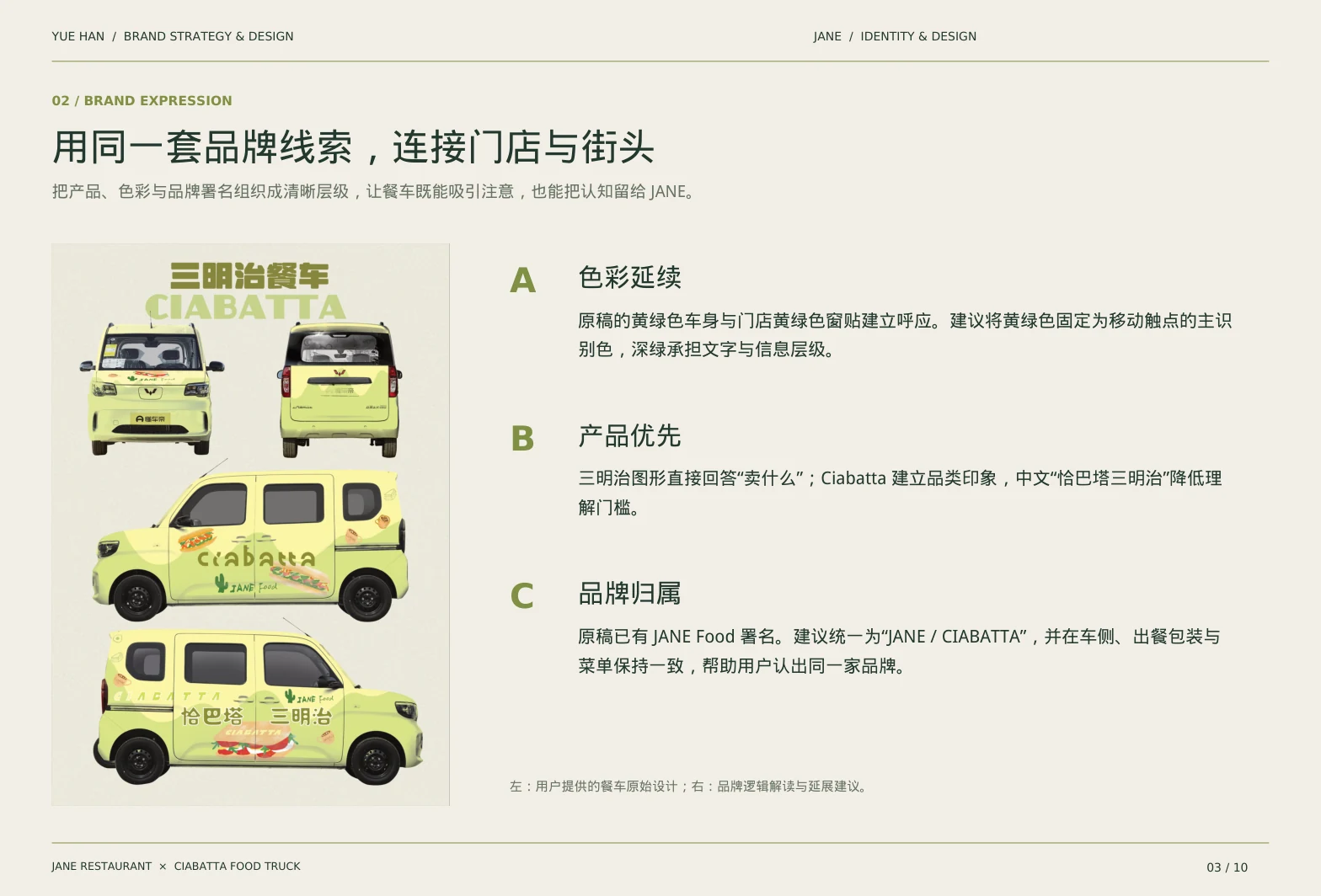
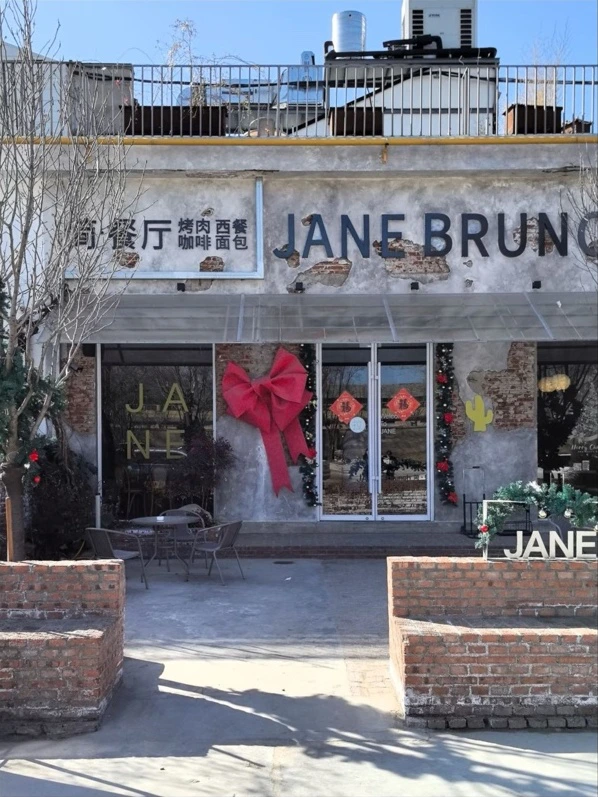
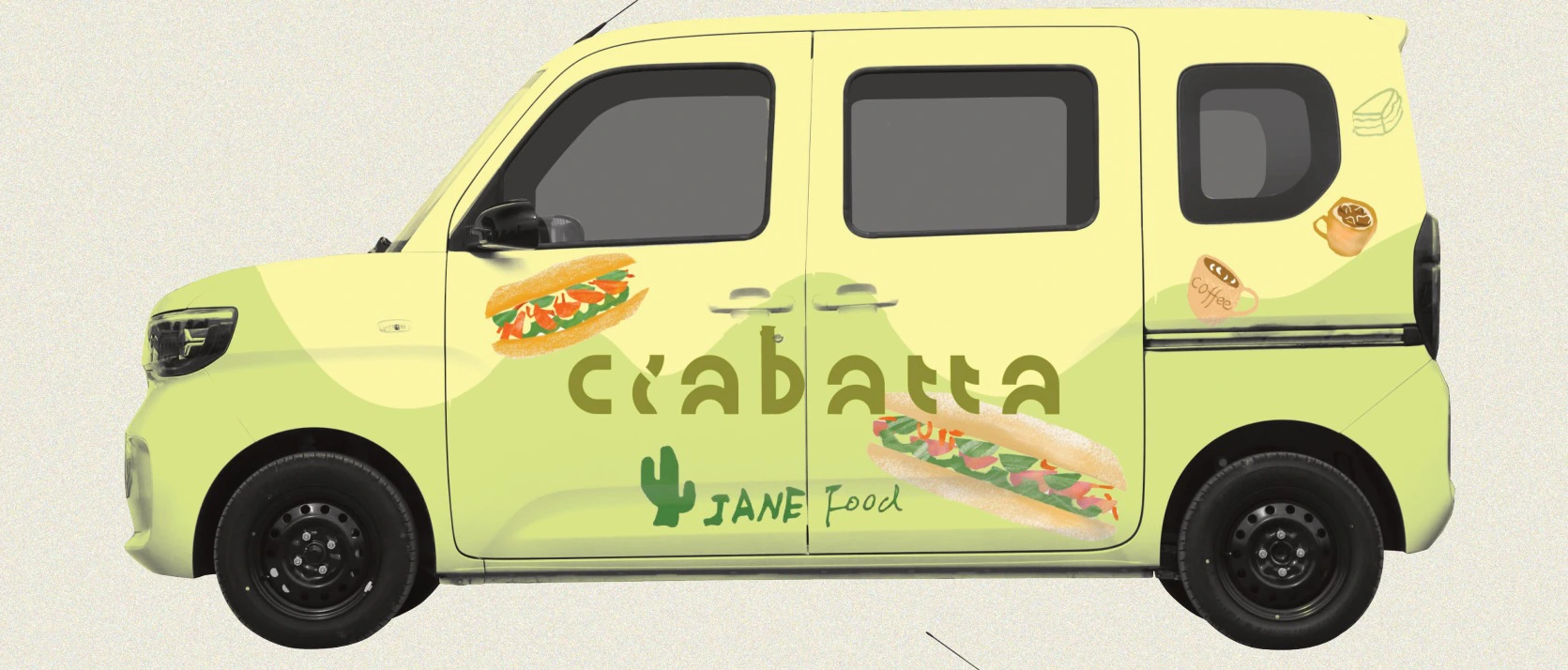
沿用门店的黄绿色、字标与庭院风格,统一车身、菜单和包装设计。
Use the restaurant’s yellow-green palette, wordmark and courtyard style across the truck, menu and packaging.
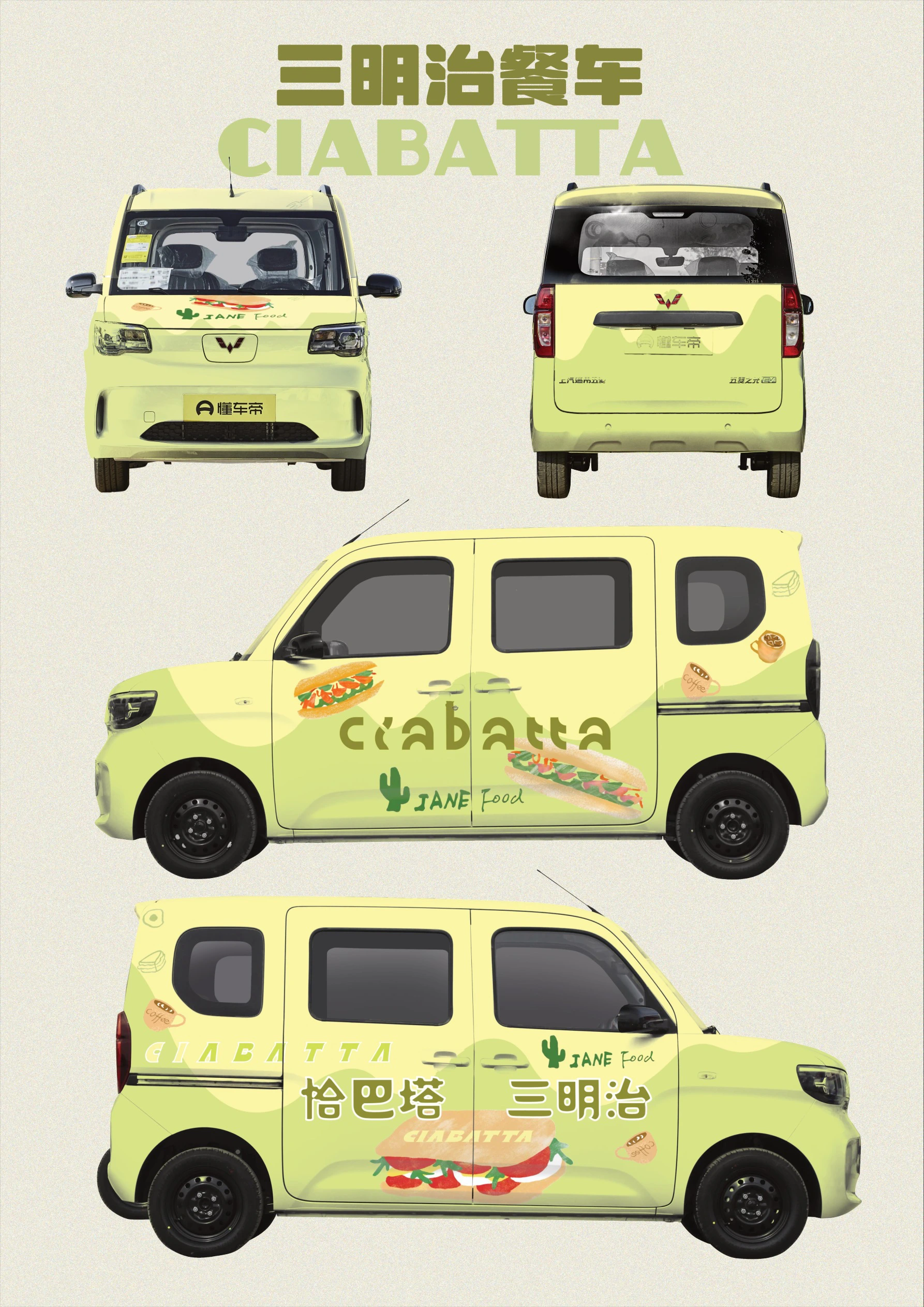
延续黄绿色车身与门店窗贴的联系,建议用深绿区分文字层级。
Continue the yellow-green connection between truck and restaurant, using dark green for text and information hierarchy.
三明治图形直观表达产品;以 Ciabatta 与中文品类名称共同降低理解门槛。
Sandwich imagery communicates the product immediately; Ciabatta and its Chinese descriptor clarify the category.
以原稿中的 JANE Food 署名为基础,建议统一为 JANE / CIABATTA,并延伸到包装和菜单。
Build on the existing JANE Food signature with a proposed JANE / CIABATTA system across packaging and menus.
建议先做两天门店庭院快闪,以内容、套餐、现场动线和回店权益连成购买路径,再根据测试结果决定是否拓展外部点位。
Propose a two-day courtyard pop-up that connects content, offers, on-site flow and return-visit incentives before considering external locations.
餐车与庭院同框建立识别,门店账号与周边渠道发布日期、地点和活动内容。
Show the truck with the courtyard; communicate the date, location and offer through brand and neighbourhood channels.
用恰巴塔 + 咖啡组合降低选择成本;清晰菜单与产品图解释卖什么、多少钱。
A ciabatta-and-coffee offer simplifies the choice; clear menus and product images explain what is sold and at what price.
点单与取餐分流,按编号出餐;包装延续品牌识别,拍照位置避开队列。
Separate ordering and collection, use numbered pickup and branded packaging, and keep photo areas away from queues.
在包装或小票加入可追踪入口与堂食权益,引导外带顾客尝试堂食。
Place a trackable restaurant entry point and dine-in offer on packaging or receipts to connect takeaway with the full restaurant experience.
招牌恰巴塔单品
仅保留两种口味
Signature ciabatta
Two flavours
恰巴塔 + 指定咖啡
作为主推组合
Ciabatta + selected coffee
Main offer
一种易出餐小食
作为加购项
One easy-to-serve side
Add-on
以上为方案定价示例;须结合原料、包装、损耗与品牌价位核算后确认。
Illustrative pricing from the proposal; confirm against ingredients, packaging, waste and brand price positioning.
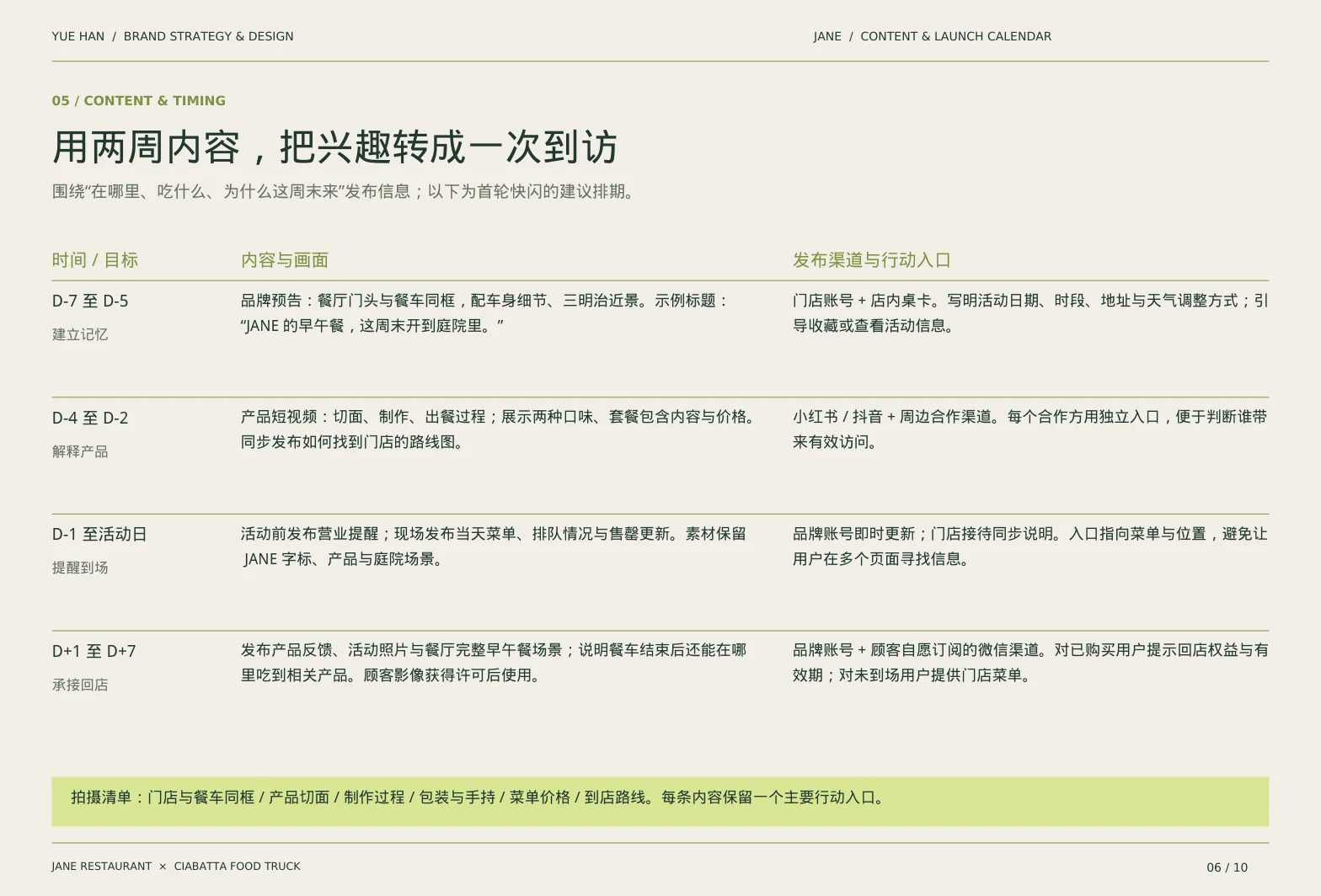
发布门店与餐车预告,明确日期、时段与地址,建立活动记忆。
Publish restaurant-and-truck teasers with dates, times and location.
用制作过程、产品切面、套餐价格和路线信息解释产品。
Show preparation, product cross-sections, prices and directions.
提醒营业时间,更新菜单、排队与售罄信息,引导查看位置。
Share opening reminders, menus, queues and sold-out updates.
发布顾客反馈与堂食场景,向主动订阅者说明回店权益及有效期。
Share feedback and dine-in scenes; explain return offers and validity to opted-in customers.
门店自有渠道触达已有客群;本地探店创作者带来周边发现;企业与园区合作连接午餐需求。为各渠道设置独立识别码,记录购买与回店情况。
Own channels reach existing customers, local creators support discovery, and business partnerships reach nearby lunch audiences. Use a separate code for each channel to track purchases and return visits.
以原餐车订单关联核销;金额与门槛须经毛利核算确认。
Link redemption to the original truck order. Confirm the offer against contribution margin.
取餐提示 → 自愿领取 → 收银核销 → D+7 统计回店
PICKUP PROMPT → OPT-IN → REDEMPTION → D+7 REVIEW
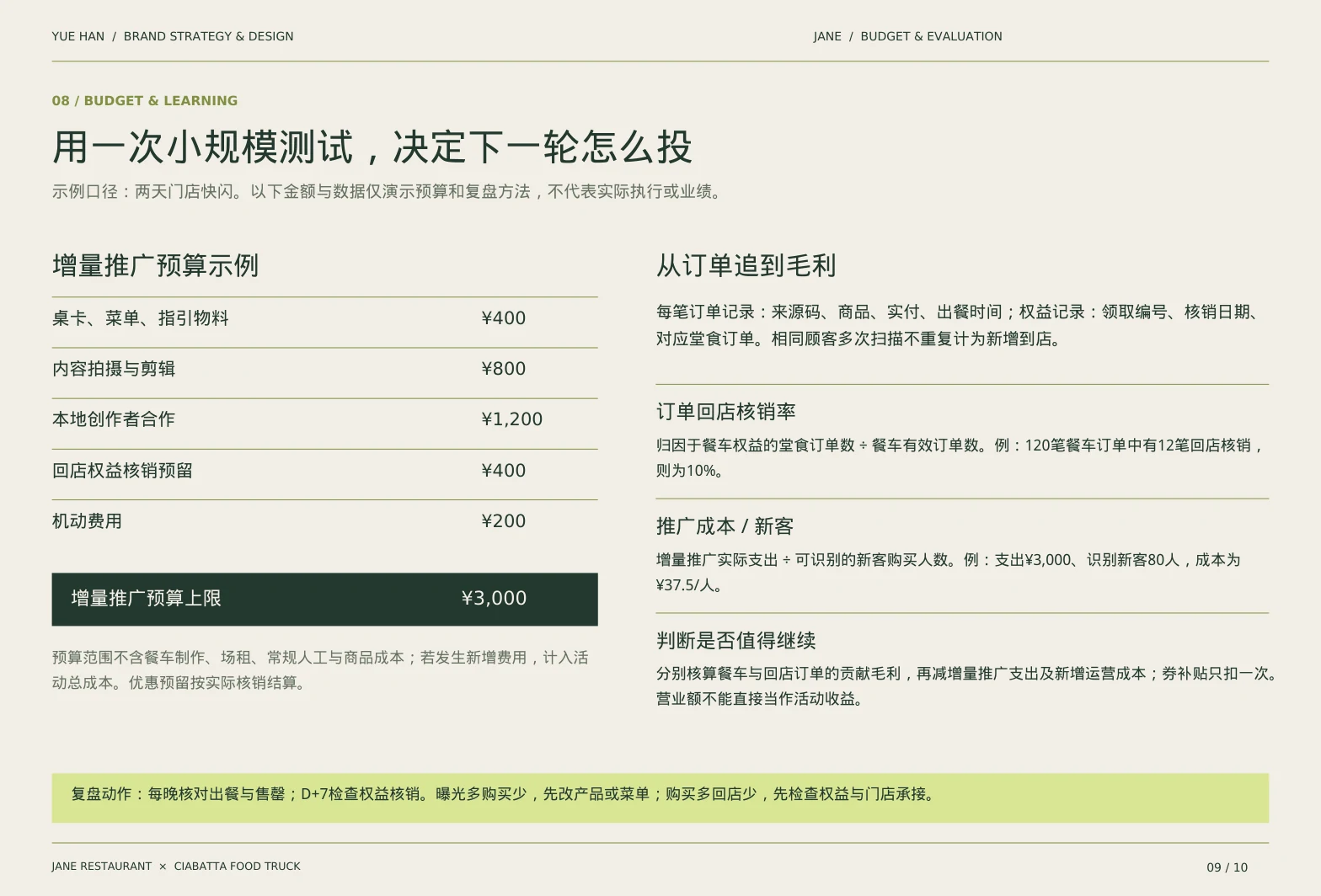
在执行前设定预算、渠道来源和回店记录方式,评估每一步的效果,再决定后续投入。以下为方法与预算示例。
Define spending and measurement in advance so the concept can be assessed at each stage. The figures below illustrate the proposal’s approach.
| 桌卡、菜单与指引Printed menus & signage | ¥400 |
| 内容拍摄与剪辑Content production | ¥800 |
| 本地创作者合作Local creators | ¥1,200 |
| 回店权益核销预留Return-offer provision | ¥400 |
| 机动费用Contingency | ¥200 |
不含餐车制作、场租、常规人工及商品成本。此为预算上限示例,不是已发生支出。
Excludes truck production, rent, regular labour and product costs. This is a proposed cap, not actual expenditure.
每笔订单记录来源、商品、实付与出餐时间,区分有效购买和重复扫码。
Record source, item, payment and service time; distinguish purchases from repeated scans.
推广成本 / 新客 = 增量推广支出 ÷ 可识别的新客购买人数
ACQUISITION COST = INCREMENTAL PROMOTION SPEND ÷ IDENTIFIABLE NEW BUYERS
用唯一权益编号关联堂食核销与原餐车订单,在 D+7 查看回店表现。
Link dine-in redemption to the original truck order through a unique offer ID; review at D+7.
订单回店核销率 = 权益关联堂食订单数 ÷ 餐车有效订单数
RETURN REDEMPTION RATE = LINKED DINE-IN ORDERS ÷ VALID TRUCK ORDERS
曝光多、购买少,检查产品或菜单;购买多、回店少,检查权益与门店承接。分别核算餐车及回店订单贡献毛利,再评估推广投入。
If exposure is high but buying is low, review the product or menu. If buying is high but return visits are low, review the offer and restaurant handoff. Assess contribution margins before further spending.
案例说明:基于原有餐车设计与餐厅实景整理的品牌延展概念。人群、套餐、排期、权益与预算为策划建议;未提供实际投放或经营数据,不陈述已实现的增长。
Case scope: a brand-extension concept based on the existing truck design and restaurant images. Audiences, offers, timing, incentives and budgets are proposals. No delivered growth or business results are claimed.